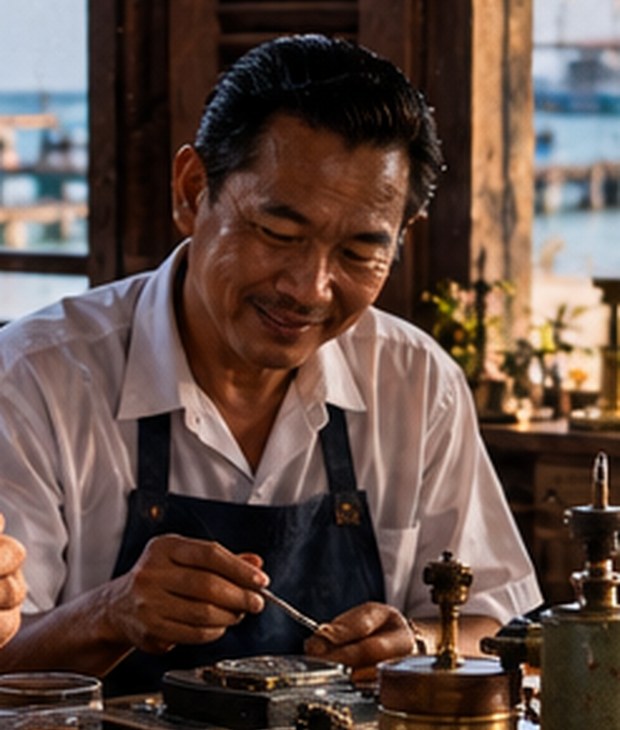
Thai repairer & founding host
Khun Prasert Wattanakul
He knew the town, understood the customers and could return a broken watch to service while the visitors were still forming their theories.
Three craftsmen came to the Gulf coast with their own notions of precision. None came looking to start a university. That, according to the archive, was the first mistake.
Founding chronicle · 1967
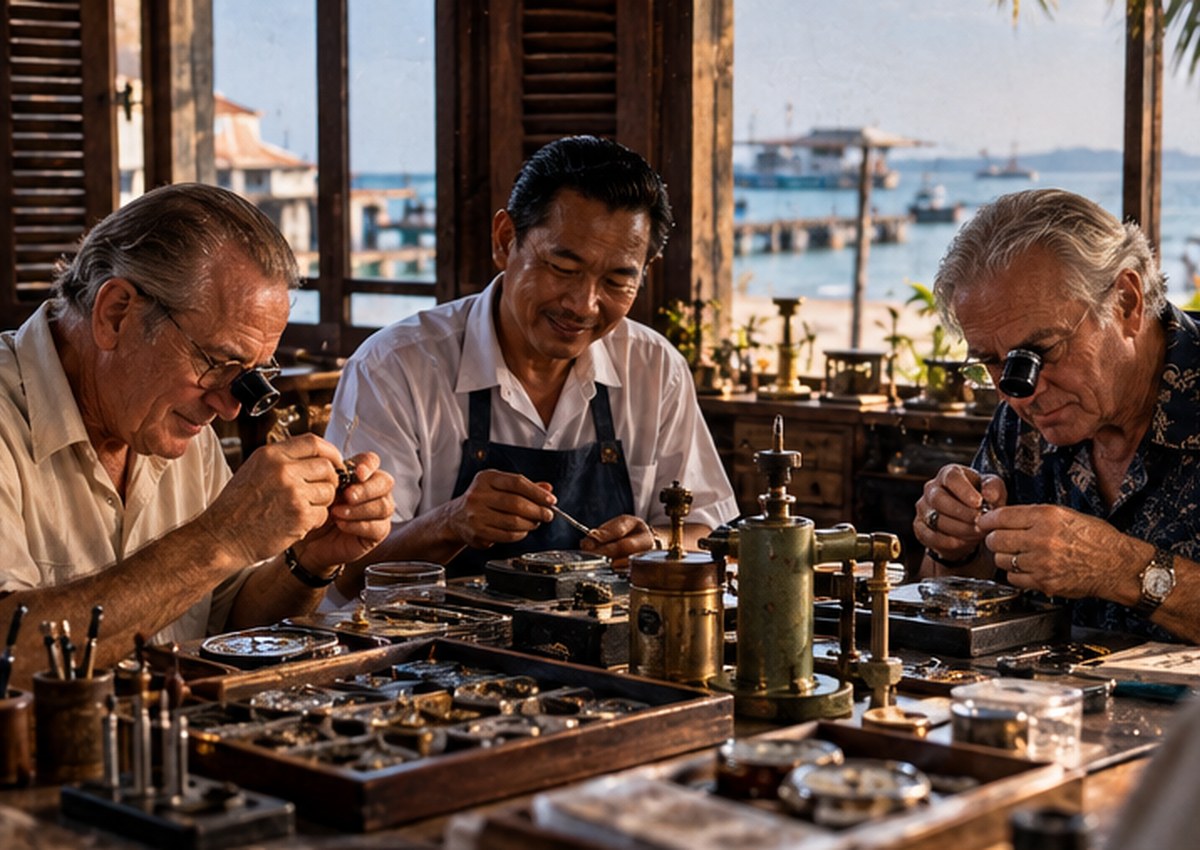
Before the crests, the alumni society and the administrative stationery, there was a bench. It belonged to Prasert Wattanakul, an inventive Thai repairer whose small premises near the waterfront serviced clocks, radios, pocket watches, fishing timers and almost anything a passing visitor could carry under one arm. The beach was already changing. Guests wanted their watches cleaned of salt and sand. Boat owners wanted clocks that could survive weather. Nobody wanted to pay what the job was worth.
In the university’s fictional founding account, Prasert met Matthias Borel, a Swiss-trained regulator traveling through Southeast Asia, and Kenji Arakawa, a Japanese precision mechanic who had spent years studying modern production techniques. Borel spoke of the intricacies of balance amplitude and hairspring poise. Arakawa spoke of measurement, tolerances and the relentless pursuit of consistency. Prasert quietly fixed the thing sitting on the bench while the other two disagreed.
They discovered an odd principle: all three were right, and none had enough spare hands. They began giving evening lessons to apprentices, sailors and visitors. At first there were four stools, a fan, a tray of movements and a chalkboard. By the time anyone thought to take attendance, students were arriving from Bangkok and beyond.
The building acquired a second room in 1971, and the chalkboard acquired an official-looking header. By 1978, an ambitious clerk had begun calling the place a university. Borel objected to the word. Arakawa suggested they measure its usefulness. Prasert asked whether it might bring more business.
What they had made was a school where precise technique and open-ended questions coexisted. It was never quite comfortable with either. The faculty insisted that every philosophical discussion end with an actual measurement. The philosophers insisted that every measurement begin with a question worth asking.
Royal Pattaya was born in the space between those arguments. The archives maintain that it has been there ever since.
Three founders · imagined archival portraits
Thai repairer & founding host
He knew the town, understood the customers and could return a broken watch to service while the visitors were still forming their theories.
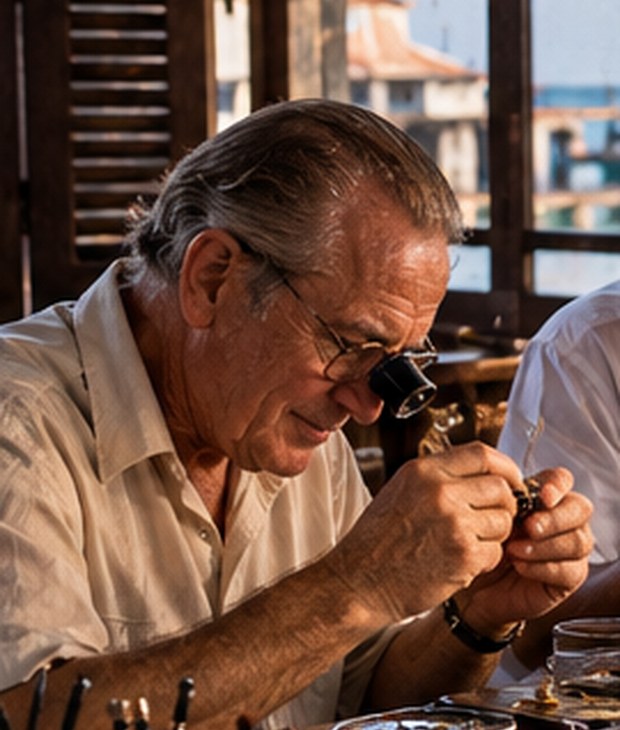
Swiss-trained regulator
Believed that a civilized argument begins with a timing machine and ends with a properly seated hairspring.
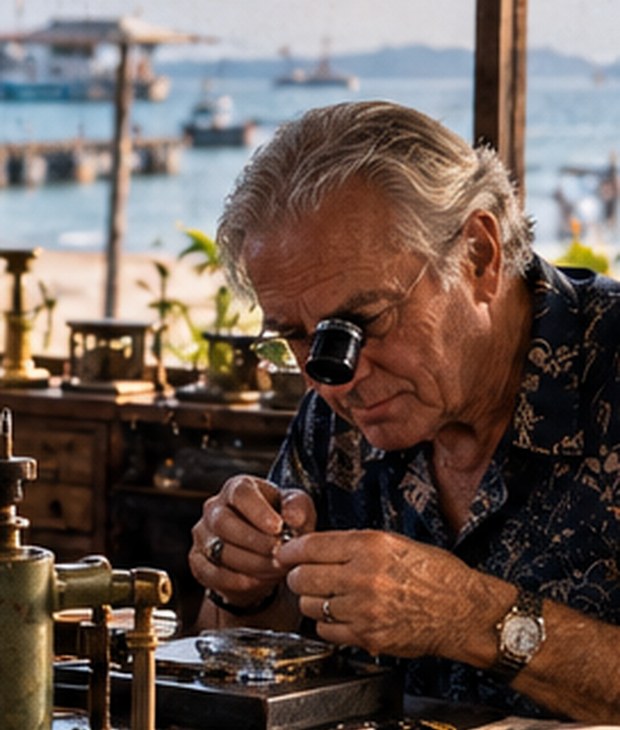
Japanese precision mechanic
Approached each movement as a system of tolerances and possibilities. Famous in the archive for writing shorter notes than the others.
The three founders, their employment histories and the above portraits are original fictional characters. The university does not claim any historical affiliation with Seiko or Swiss manufacturers.
A chronology of fact and fable
Seiko took part in Swiss observatory chronometer competitions, a real turning point for Japanese precision watchmaking.
Seiko introduced its first Japanese diver’s watch, part of the era’s growing interest in practical mechanical instruments.
Prasert, Borel and Arakawa open the waterfront workshop to curious apprentices and stranded watch owners.
The Seiko Quartz Astron arrived in December 1969, changing the terms of the entire watchmaking debate.
Two classrooms, a tropical courtyard and a signboard finally convince the faculty that the school might endure.
Pattaya gained city status. University lore insists its first commemorative certificate was printed this same year.
A group of graduates meets at a seaside restaurant. Three remember the classes. All remember the bill.
The current administration releases the illustrated institutional record, minus several missing appendices.
Archivist's note: one 1967 seminar memorandum survives only through later references. The dating evidence is best approached through the Japanese specimen archive; the relevant copy is filed under Annex / F-001. Original workshop records remain fictional reconstructions.
Editorial provenance
The region and the developments in real horology deserve accurate treatment. The university’s founders, degrees, campus photographs and institutional documents are storytelling inventions. Real background research used in this chronicle:
Seiko Museum Ginza · 1950s to 1960s historical developments ↗
Seiko Watch Corporation · Heritage chronology ↗